Human Risk Management. Reimagined for Today's Workforce.

One platform to understand, prioritize, and reduce risk across humans and AI agents — starting with phishing and security training, and extending through guided action.

A proven foundation for measurable outcomes today, with an intelligence layer designed to evolve as workforce risk changes.
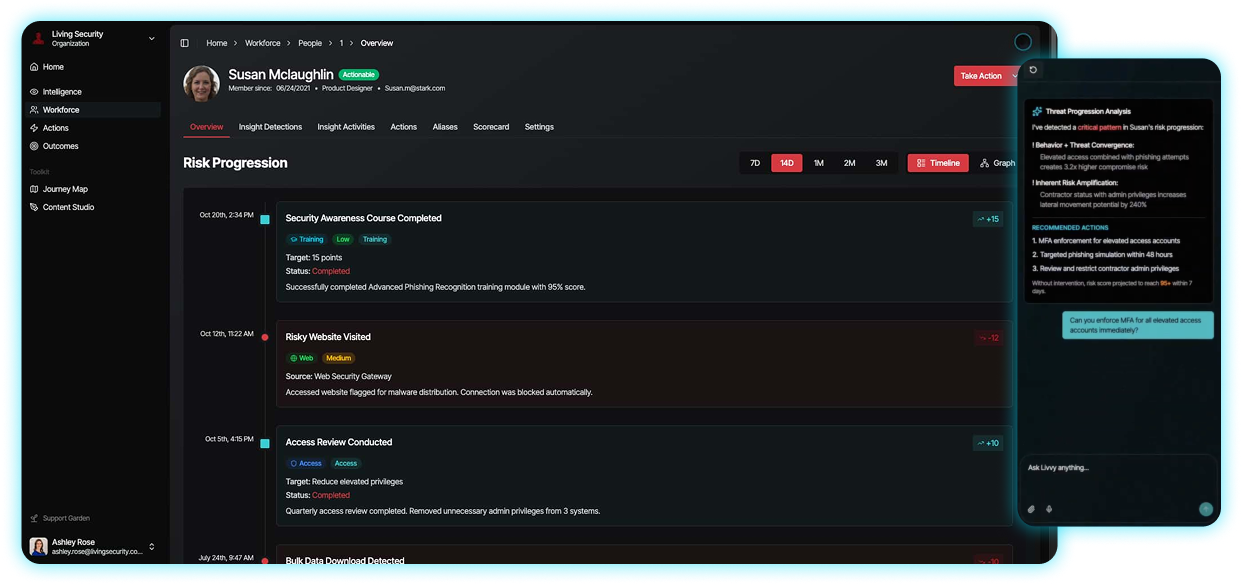

screencap

Built to Accelerate Outcomes Smarter Faster Scalable

Livvy_marketecture_sq
Icon_ManagerReporting-Shield

Predict with precision

Anticipate humans and AI agent risk with a platform that ingests and contextualizes data from across your tech stack — analyzing 200+ real-world signals to reveal risk trajectories early, so your team can act before incidents happen.

Icon_User-Shield

Guide with explainable AI

Translate complexity into clear, evidence-based recommendations—complete with reasoning and confidence scores, so your team always understands why to act and how to move forward.

Icon_Calendar-Shield

Act autonomously and at scale

Automates 60–80% of remediation tasks, from triggered coaching to policy enforcement—all with human oversight and real-time measurement of outcomes.

Each action reinforces secure behavior while results roll up into real-time dashboards and scorecards, closing the evidence loop between action and measurable impact.

livvy-placeholder

Powered by Livvy, the Intelligence Engine Behind the Platform

Livvy connects signals across behavior, identity, and access, learning from outcomes to help teams anticipate risk, make better decisions, and take consistent action. Always explainable. Always auditable. Built to improve over time.

Risk Looks Different When You’ve Seen It Before

When everything looks risky, knowing what comes next is the real advantage.

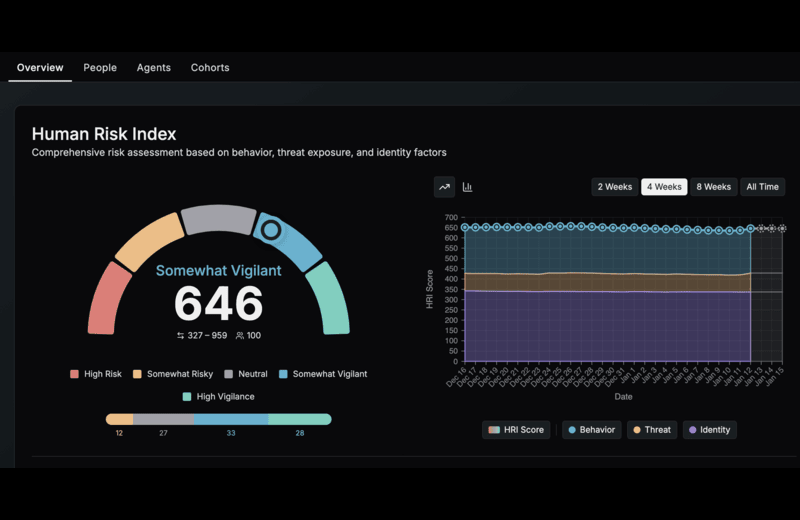
Human Risk Index (HRI)

Gain foresight with a dynamic score (1–1000) built on historical risk trends across hundreds of behavioral, identity and threat signals. Spot deteriorating posture early, validate risk reduction and benchmark progress.
HRI Score-1
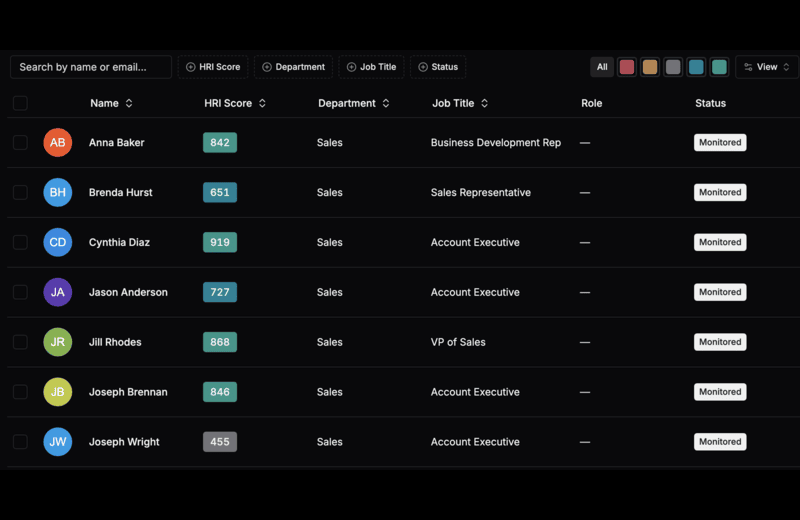
Entity Graph

Unify identity data across HRIS, SSO, endpoint, and email into a single, accurate user profile—cutting investigation time by up to 70% and eliminating blind spots.
Entity Graph-1
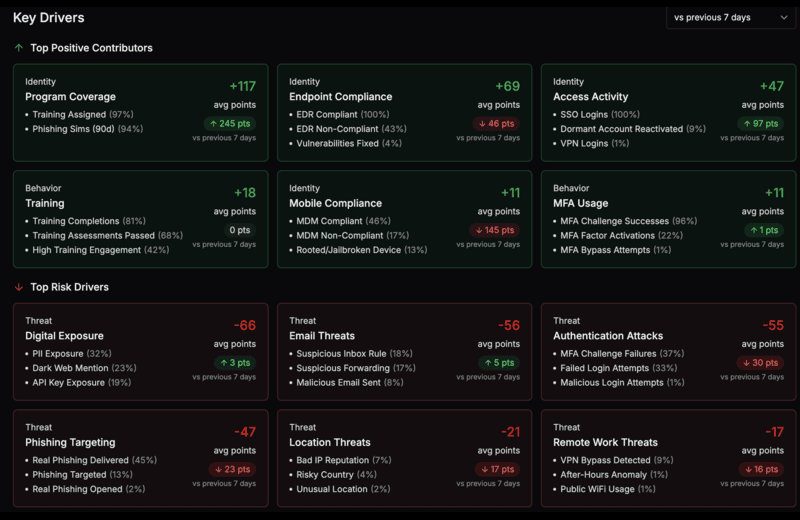
Explainability

Stay ahead of emerging risk with plain-language insights that clarify not just what changed, but why. Continuously analyzes behavioral signals—phishing clicks, policy violations, credential hygiene—to surface root causes and behavioral pattern shifts. Early warnings become clear, actionable intelligence that helps teams intervene before incidents escalate, cut response costs, and communicate risk in terms leaders understand.
Explore Use Cases
Explainability-1

Visibility Exposed the Problem. Now What?

Next steps become easier when risk is explained, not just flagged.

Guided Remediation

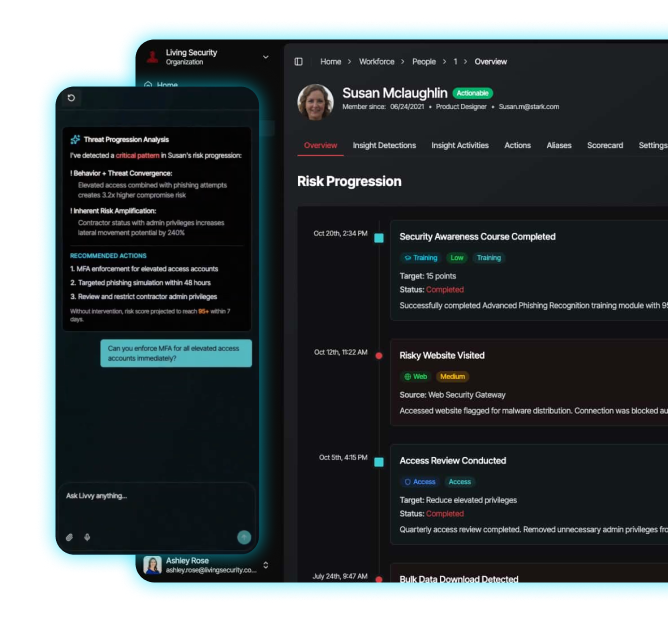
Removes guesswork from day-to-day decisions with a built-in coach that analyzes risk signals and recommends targeted actions with predicted impact, turning complex data into clear, prioritized next steps.
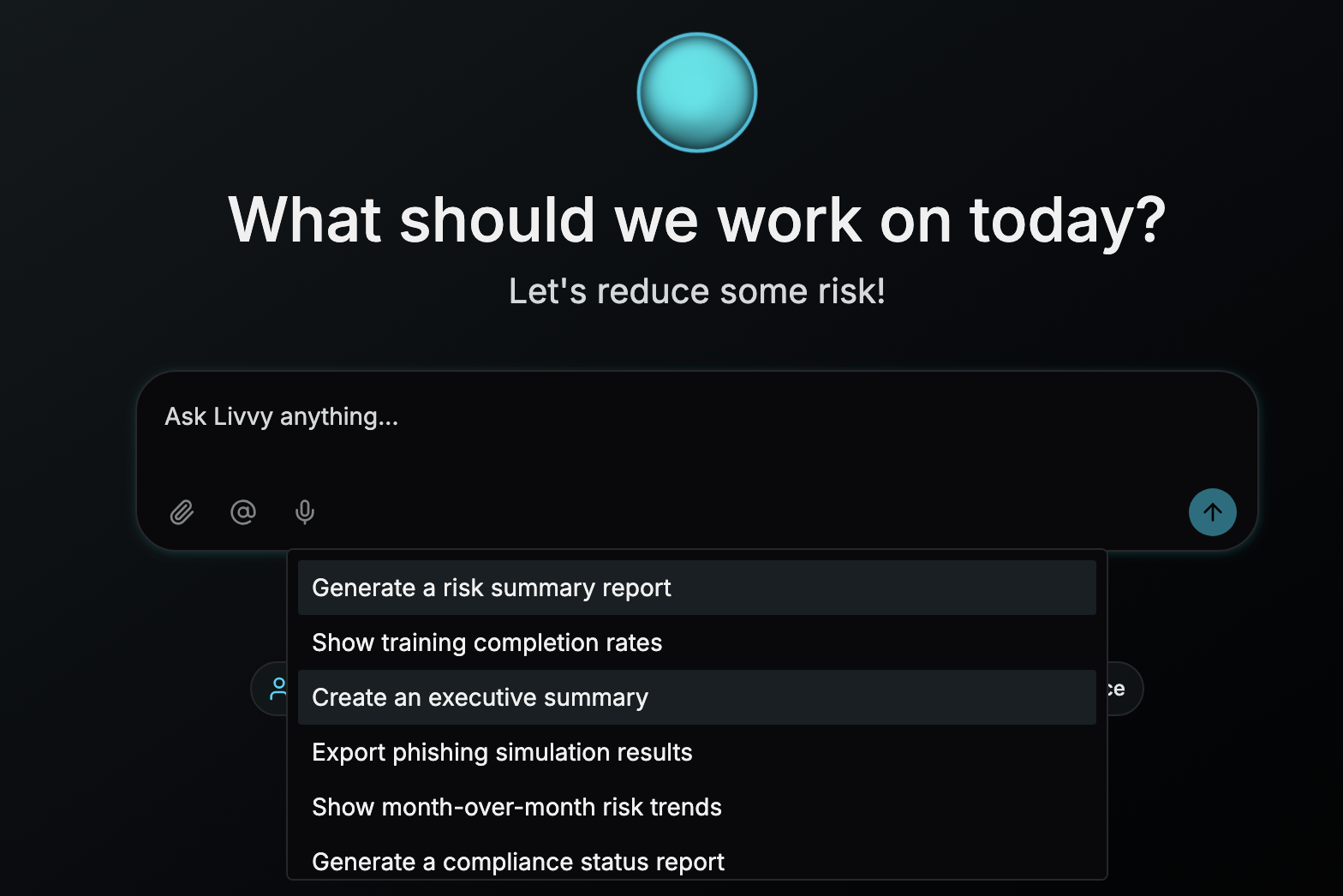
Ask Livvy
HRM Goals and Adaptive Playbooks

Drive focused risk reduction at scale by defining your program goals and letting AI  build and refine adaptive playbooks that execute them with precision and human-in-the-loop control. The result: coordinated action that delivers measurable impact—up to a 50% reduction in risky users, validated by Cyentia.
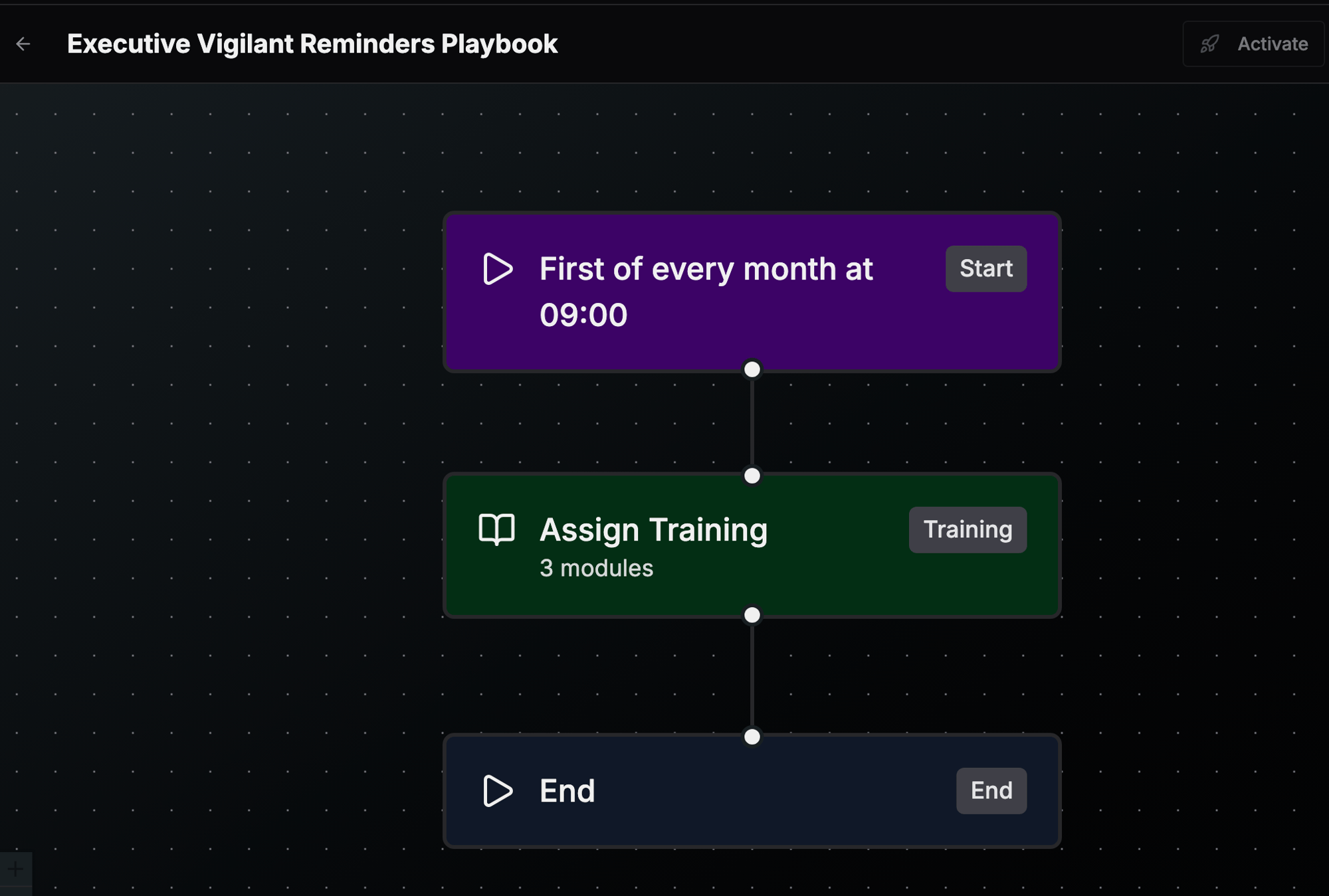
Playbooks
Closed-Loop System

Create continuous improvement and program confidence by connecting detection, action, and measurement in one adaptive cycle. Each action – targeted training to policy enforcement, or remediation —  feeds insights back into the system to sharpen future recommendations and prove impact over time. 
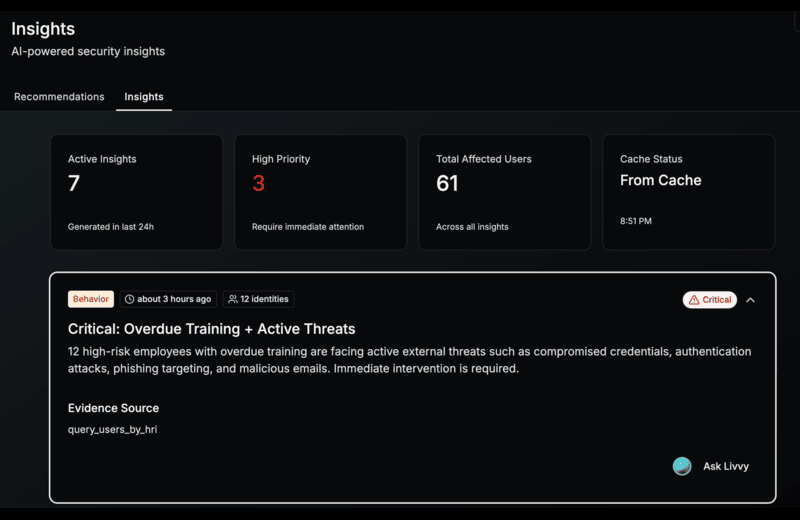
See Use Cases
Insights-1

Knowing What to Do Isn’t the Same as Doing It…at Scale

Risk doesn’t wait. Action needs to happen at the moment it matters.

Multi-Channel Response

Remediate at scale without adding headcount. Detects risky behaviors and executes interventions across email, chat, and learning platforms within seconds—eliminating manual bottlenecks and enabling your team to remediate 10× more users.
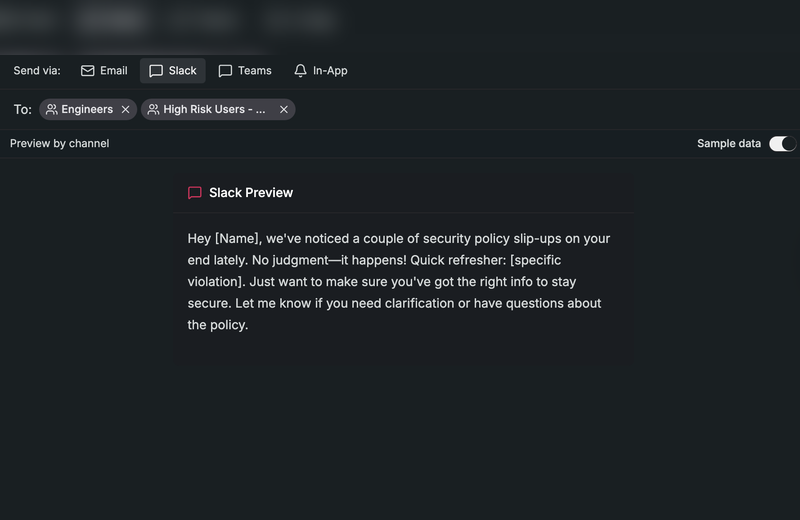
Nudge
Adaptive Response Actions

Contain emerging risks before they spread with real-time responses — like dynamic scorecards, AI-generated personalized training, or outbound remediation through adaptive controls—automatically triggered the moment risk spikes.
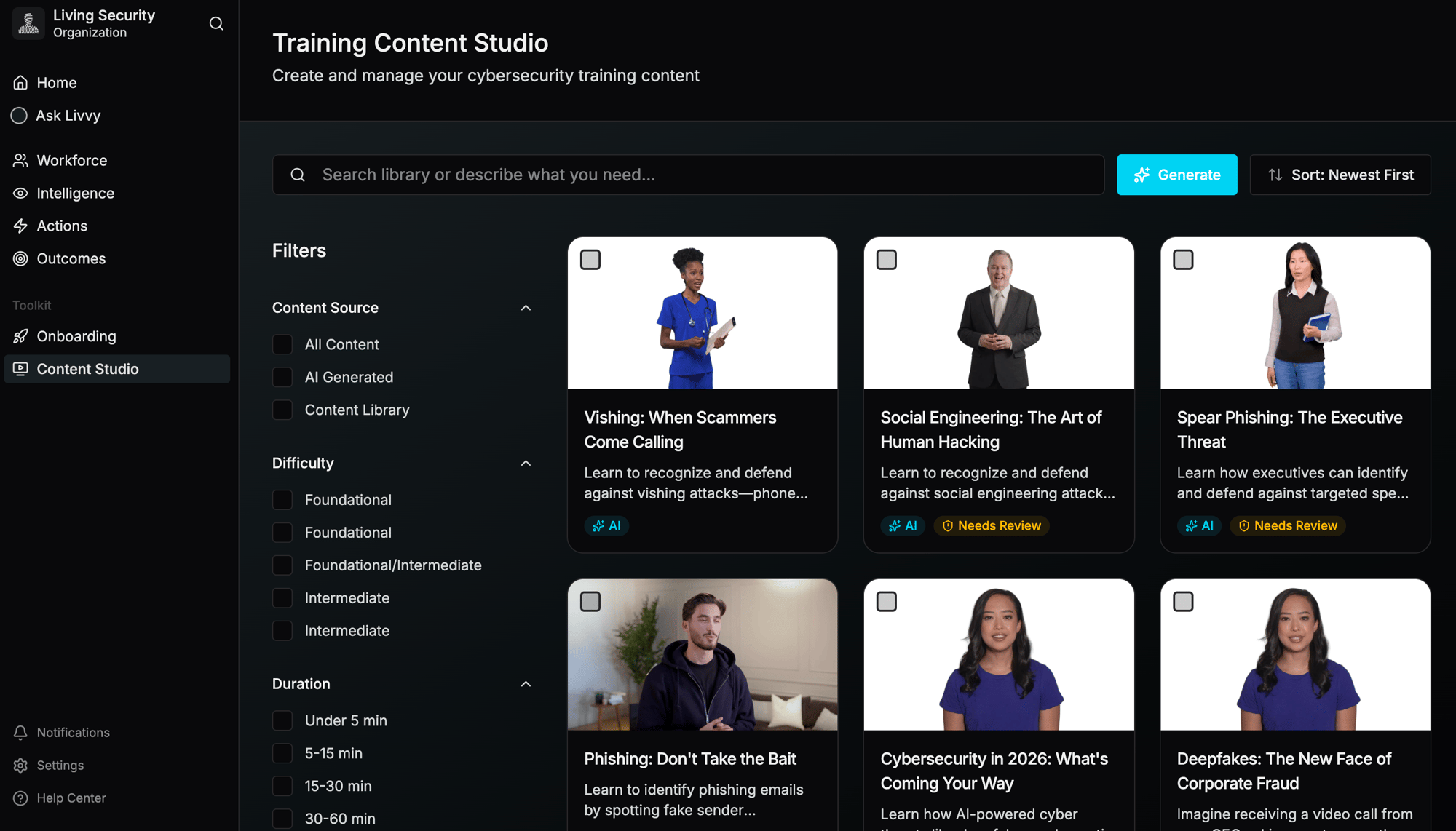
AIGeneratedTrainingVideos
Action-Ready Reporting

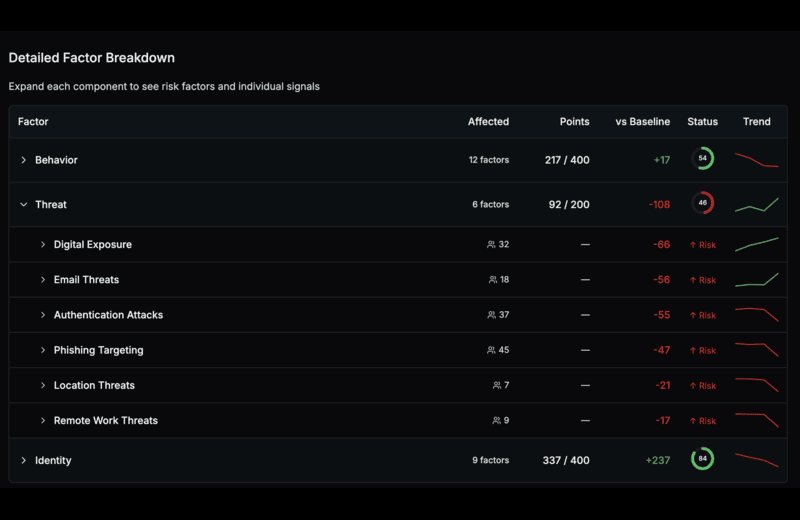
Automatically generate clear, executive-ready reporting that explains risk movement across behavior, threat, and identity, down to the exact factors and cohorts driving change. Livvy turns live signals into defensible narratives and trend analysis, so every action is justified, auditable, and ready to share the moment it matters.
View Use Cases
Detailed Factors

Proven Results

50 %
fewer risky users
60 %
faster remediation
98 %
reduction in exposure

Confidence Comes From What’s Been Proven

Validated outcomes and transparent decisions.

Proven AI-native Architecture

We deliver dynamic predictive visibility built on five years of proprietary data from 100+ enterprises and billions of behavioral, identity, and threat signals.

Validated by the Cyentia Institute, this approach enables 50% reduction in risky users and measurable decreases in data-loss exposure.

Keeps Humans in Control

Every recommendation is explainable, scored, and auditable. Teams can review and approve actions before they run, and provide feedback that continuously improves future decisions. Automation accelerates response, while humans retain authority and accountability.

Built with Intelligence that Scales

Designed from day one to think, adapt, and act in real time. Unlike legacy HRM tools that retrofit AI onto static workflows, our platform is powered by 5 years of proprietary data, guided by policy and human oversight, and architected for enterprise scale.

A Platform Built on Experience, from Awareness to Full HRM

Built to support humans and AI agents alike, with the flexibility to evolve alongside your program.
ui-glow-half-right

FAQ

How is Living Security different from other Human Risk Management or phishing vendors?

Many vendors focus on a single slice of the problem, such as phishing simulations or training delivery. Living Security takes a broader approach by connecting those signals into a unified view of workforce risk.

Rather than treating events like phishing clicks as isolated failures, Living Security correlates behavior, identity, and access data to reveal patterns and guide action. This allows teams to start where they are, whether with phishing or training, and evolve toward measurable risk reduction without rebuilding their program.

What does AI-native Human Risk Management actually mean?

AI-native Human Risk Management means intelligence is built into the core of the platform rather than added on later. Instead of using static rules or surface-level analytics, AI-native HRM continuously analyzes behavioral, identity, and threat signals, learns from outcomes, and adapts over time.

This allows teams to anticipate risk earlier, understand why it matters, and take consistent action with human oversight. AI-native HRM focuses on helping teams make better decisions at scale, not replacing human judgment.

What should CISOs look for when evaluating a Human Risk Management platform?

CISOs should look for platforms that move beyond awareness metrics and provide measurable risk reduction. Key considerations include the ability to correlate signals across systems, explain why users or behaviors are risky, guide consistent action, and prove outcomes over time.

Equally important are transparency and control. Recommendations should be explainable, actions auditable, and humans kept in the loop. The right HRM platform should reduce operational burden while increasing confidence in decisions and results.

What is workforce risk, and how do humans and AI agents factor into it?

Workforce risk refers to the security risk introduced by all identities that interact with systems, data, and applications. This now includes both humans and AI agents. Employees, contractors, and AI agents all make decisions, access resources, and take actions that can increase or reduce risk.

As AI agents become more autonomous and capable, they introduce new forms of risk that behave more like human risk than traditional machine risk. Managing workforce risk requires a unified approach that accounts for behavior, access, and impact across both human and non-human identities.

How do you measure human risk beyond phishing click rates and training completion?

Measuring human risk requires looking beyond isolated events and static metrics. Modern HRM programs correlate multiple signals such as phishing behavior, identity posture, access level, policy violations, and repeated behaviors across systems.

By analyzing these signals together over time, organizations can identify patterns, track changes in risk posture, and measure whether interventions actually reduce exposure. The result is a defensible view of risk that reflects real behavior, not just activity in a single tool.

​​What is Human Risk Management, and how is it different from security awareness and training?

Human Risk Management (HRM) is an approach to security that focuses on reducing risk created by human behavior, not just improving awareness or compliance. Traditional security awareness and training programs are designed to educate users and measure participation through metrics like completion rates and phishing clicks. HRM goes further by continuously measuring risk, correlating behavior across systems, and guiding interventions that reduce actual exposure.

In practice, HRM shifts the goal from “Did people complete training?” to “Did risk go down?” It treats human behavior as a dynamic risk surface that can be understood, prioritized, and managed over time.

What’s the difference between behavior-based risk modeling and traditional UEBA?

Traditional User and Entity Behavior Analytics (UEBA) focuses on detecting anomalies, often generating alerts when behavior deviates from a baseline. While useful for detection, UEBA typically operates in isolation and stops at alerting.

Behavior-based risk modeling, as used in modern HRM, looks at patterns over time and across systems to understand risk trajectories, not just anomalies. It connects behavior to identity posture, access level, and business impact, and ties insights directly to guided or automated interventions. The goal is not just to detect unusual behavior, but to reduce risk before incidents occur.

# # # # # # # # # # # #